August 27, 2024
Varanasi, Banaras, or Kashi, whatever you call it, is one of the oldest living cities globally. The prominence of this area is revealed in Hindu mythology, making it an ultimate pilgrimage spot for Hindus since ancient times. As per belief, one graced to die in the holy land of Benaras is bound to attain salvation and shed their fetters from the cycle of birth and rebirth. Mythologically known as the abode of Lord Shiva and Parvati, the origin of this city is yet to be known. The majestic Ganges that flows like a ribbon weaved through the tapestry of a vibrant City is believed to have the power to wash away the sins of mankind.

On the banks of the holy river, which is said to have originated from the tresses of Mahadev, it has stood as a hub of learning and civilisation for over 3000 years. Knowledge, philosophy, religion, and culture have flourished through numerous places to visit in Varanasi for centuries.
Associated with the genesis of mysticism, spiritualism, yoga, and ancient languages like Sanskrit, Varanasi is appropriately called the cultural capital of India. This is the birthland of many honoured authors like Tulsidas and Premchand and has been the playground of Vaishnavism and Shaivism. These regions are now preserved as one of the finest places for sightseeing near Varanasi, which you can explore on your next vacation.
This guide covers Varanasi’s famous temples, sacred ghats, cultural landmarks, and nearby attractions, along with ideas for planning your itinerary.
Discover the various spots, learn about the story of the freedom struggle, pay homage to the various deities, or spend a few moments of peace in the holy ghats of Varanasi, witnessing the overall beauty of the city. Learn why Mark Twain got installed by the sanctity of Banaras and penned, “Benaras is older than history, older than tradition, older even than legend and looks twice as old as all of them put together. ”
Varanasi’s ghats are more than riverfront steps. They are places where cremation rituals, morning prayers, temple traditions, music and everyday life unfold beside the Ganges. Each ghat has its own history and atmosphere, making the riverfront worth exploring beyond the usual landmarks. Here is a comprehensive list of places to visit in Varanasi:

One of the oldest and most sacred attractions in Varanasi is the Dashashwamedh Ghat. Famous for its age-old traditional aarti, the elaborate and lively ceremony takes place every evening. The blowing conch shells, clanging cymbals, and chanting holy mantras create a surreal atmosphere as the devotees venerate the Ganga at daybreak.
Take a trip to one of the historical places in Varanasi to witness this mesmerising hour-long ritual moored at the boats around the ghats. Experience a unique activity of floating diyas on leaf platters decorated with flower petals on the holy Ganges. You can also experience a boat ride, which usually costs around 500-1000/hr.

On the banks of the Ganges lies the Manikarnika Ghat, like a poignant window into life's eternal journey. It houses the eternal fire that has been believed to have been ablaze since ancient times, serving as an open crematorium. The ghats of the city of lights are very religious and considered a sanctum where the human misery of this world is put to an end.
As the legend goes, if the blessings of life start at Dashashwamedh, it takes a full course and ends at the Manikarnika, completing the life cycle. Paradoxically, this is one of the unique places to visit in Varanasi, where salvation can be attained even through death.
One can take a gondola down the Ganges to reach such places to visit from Varanasi. Alternatively, you can also travel by bus. Although the air hangs heavy with the stench of death most days, this is a must-visit place if you are looking for philosophical and spiritual upliftment.

Assi Ghat draws travellers from all over the globe, some of whom may be looking for liberation, some for solace, or others for research. As one of the places of interest in Varanasi, this is the exact junction where the Ganges meets the Assi River. The lingam of Shiva, established under the peepal tree, is worshipped with an elaborate holy fire ritual coupled with blowing conch sounds and clanging of bells.
At dawn, Subah-e-Banaras adds to the experience with Vedic chants, yoga, classical music and a serene morning Ganga Aarti, offering visitors a peaceful glimpse into Varanasi’s spiritual traditions. The air around this place feels heavy with spiritual fervour as devotees and priests chant mantras, making it one of the spiritual places to see in Varanasi.
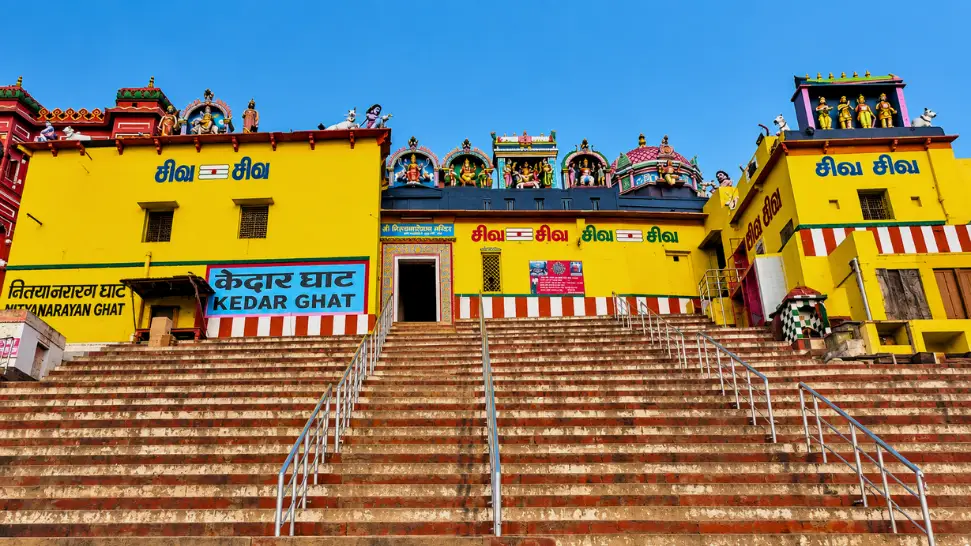
Kedar Ghat has a distinct South Indian influence, visible in its architecture and religious traditions. The Kedareshwar Temple, dedicated to Lord Shiva, is its main attraction. Pilgrims visit the ghat to perform rituals and take a sacred dip in the Ganges. Its colourful steps also make it visually distinctive.
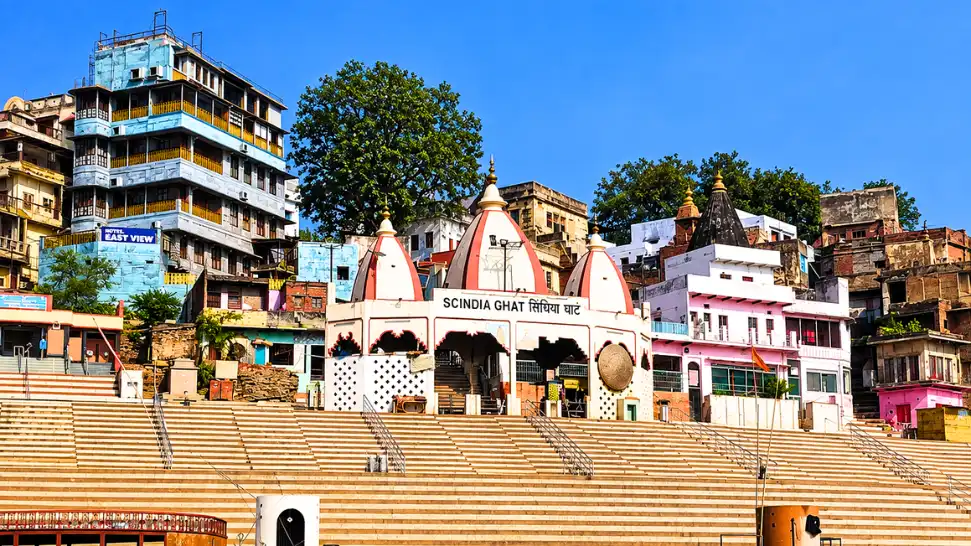
Scindia Ghat is known for the partially submerged Ratneshwar Mahadev Temple, which gives the riverfront a striking appearance. The temple’s tilted structure is particularly noticeable when viewed from the Ganges. The ghat also sits close to Manikarnika Ghat, placing visitors near some of Varanasi’s most significant religious sites.
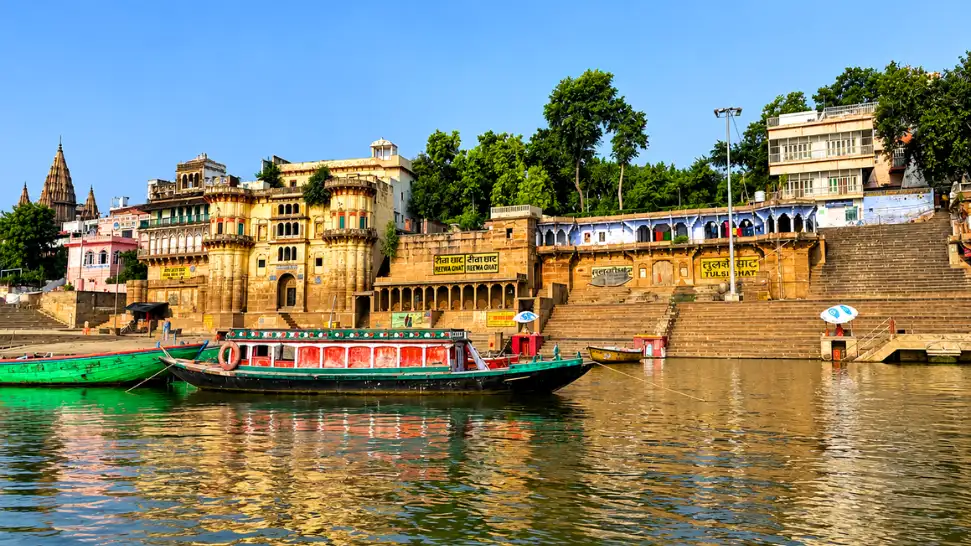
Tulsi Ghat carries a strong literary and cultural connection with Tulsidas, the poet associated with the Ramcharitmanas. The ghat is also linked with traditional performances and festivals, including Nag Nathaiya. Its quieter setting and long-standing association with literature, music and devotional traditions give it a character distinct from busier ghats.
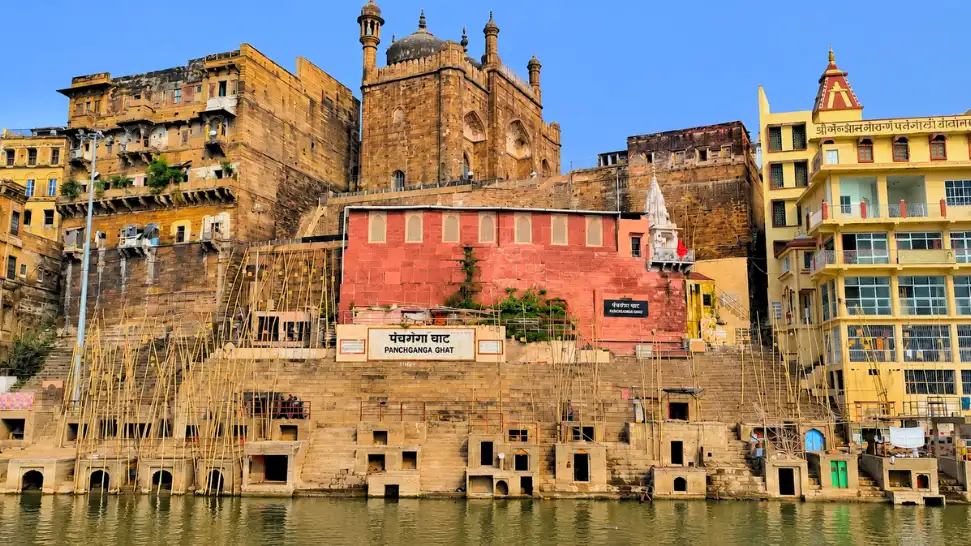
Panchganga Ghat holds significance because of the traditional belief that five sacred rivers meet here. The historic Bindu Madhav Temple adds to its religious importance. It is also associated with the Vaishnava tradition and has long attracted pilgrims. The ghat offers a comparatively peaceful setting for observing Varanasi’s devotional practices.
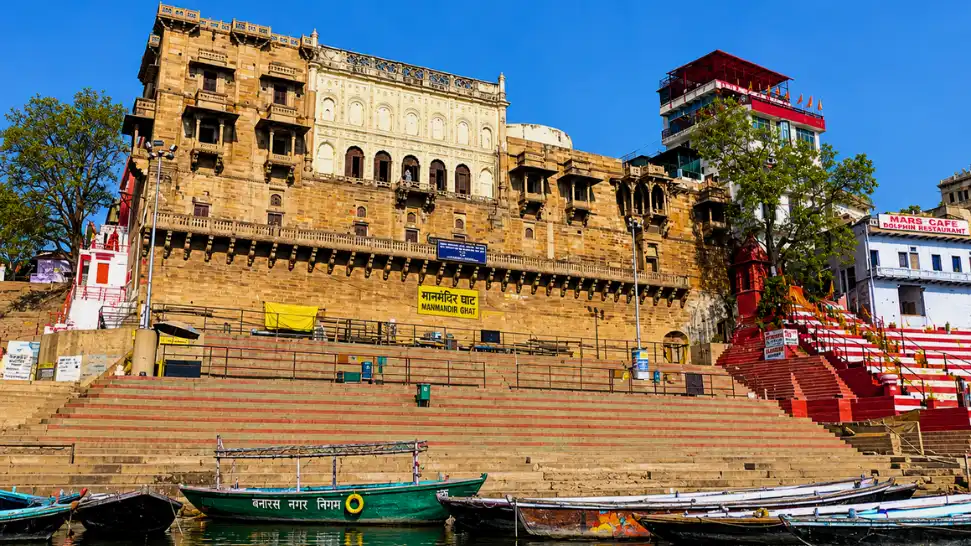
Man Mandir Ghat brings together religion, royal history and astronomy. The ghat was developed by Maharaja Man Singh of Amber, while Sawai Jai Singh II later established the Jantar Mantar observatory here. Visitors can see astronomical instruments alongside historic architecture, making this one of Varanasi’s more unusual heritage sites.
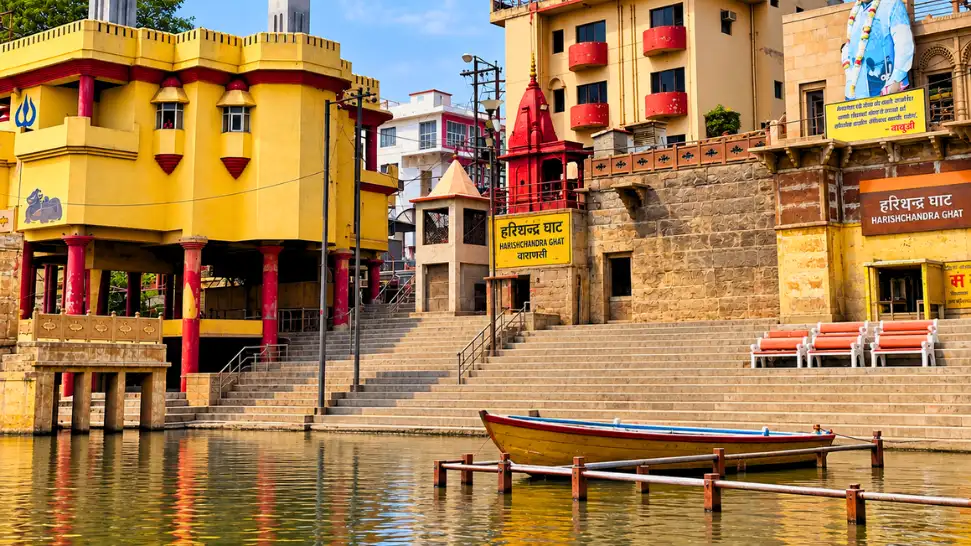
Harishchandra Ghat is one of Varanasi’s principal cremation grounds and remains closely associated with Hindu funeral traditions. According to legend, King Harishchandra worked here as a cremation attendant. The ghat presents a deeply solemn side of the city, where cremation rituals continue alongside the everyday activity of the riverfront.
Varanasi’s temples reflect the city’s deep connection with Shiva, Shakti and other Hindu traditions. From revered shrines to centuries-old temples tucked into narrow lanes, these sacred sites reveal another side of Kashi.
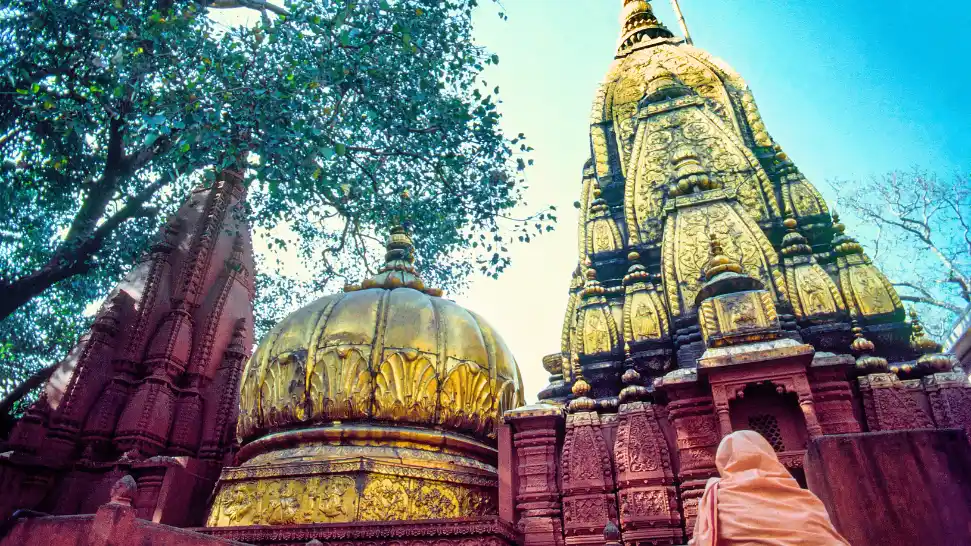
Standing tall on the banks of the holy Ganges, the beautiful city of Varanasi cradles the Kashi Vishwanath Temple, in which the Jyotirlinga of Shiva, Vishweshwara, or Vishwanath is enshrined. Millions of Indians gravitate towards this temple, seeking benediction and inner peace by the darshan of one of the 12 Jyotirlingas in India. Devotees say that by darshan of this Jyotirlinga, people can be liberated from the eternal bondage of Maya and attain enlightenment.
Most people see this as the foremost place to visit in Varanasi, and some even consider it the sacredest temple in the country. The legend of the Kashi Vishwanath is over a couple of thousands of years, and it is hard not to be awed by the spirituality of the temple when you visit it. The mesmerising milky white marble architecture of the temple contrasts with the domes wrapped in gold, glistening under the sun. Many devotees believe this temple has a soul-cleansing capability, and to experience the same, take a trip to this one of the best places to visit in India with family.

The Durga Temple is one of the major attractions in Varanasi. It is also called the Monkey Temple due to the prolific monkey population in the area. Constructed in the 18th century under the guidance of a Bengali Maharani, the architecture of this temple has a multi-tiered shikhara built in the north Indian style. On the right side of this temple stands the Durga Kund, which adds to the splendour of the premises.
Legends have it that the Durga statue was not sculpted by humans but appeared on its own. During Navratri, numerous devotees flock to this temple as it is one of the best places to visit in North India to witness the festivities. Although the temple can be visited throughout the year, it is one of the best places to visit in September in India due to the grand Dussehra celebration on the temple grounds. The area is spruced up with multicoloured stalls, creating a festive vibe.

Standing proudly as a symbol of unity, diversity, and cultural heritage, the Bharat Mata temple is on the Mahatma Gandhi Kashi Vidyapeeth campus. It was inaugurated by Mahatma Gandhi in 1936 and is one of the unmissable places to visit in Varanasi. Babu Shiv Prasad Gupta was the visionary behind this unconventional temple, who aimed to create an emblem of national unity. The significance of this temple lies in its distinctiveness of not being dedicated to a particular deity but to the motherland personified as Bharat Mata.
Witnessing the testament of amalgamation and unity of various cultures is one of the top places to visit in February in India. Although it stays open all year round, we'd recommend you visit in February as the temperature is moderate, contrary to the sultry summers of Varanasi.
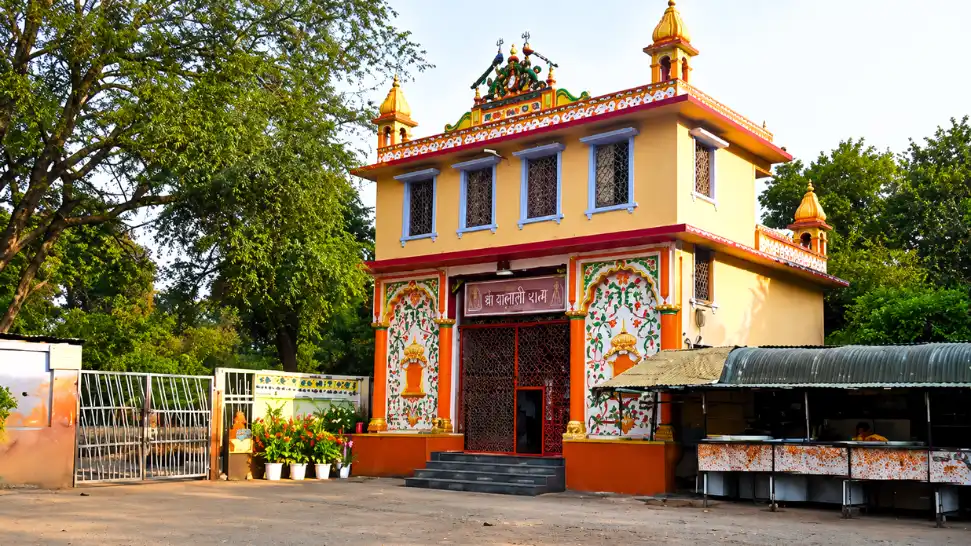
Dedicated to Lord Hanuman, Sankat Mochan Temple is one of Varanasi’s most revered Hanuman shrines. The temple is traditionally associated with Tulsidas and attracts devotees who recite the Hanuman Chalisa. Its annual Sankat Mochan Sangeet Samaroh also brings renowned classical musicians and performers together for a celebrated cultural gathering.
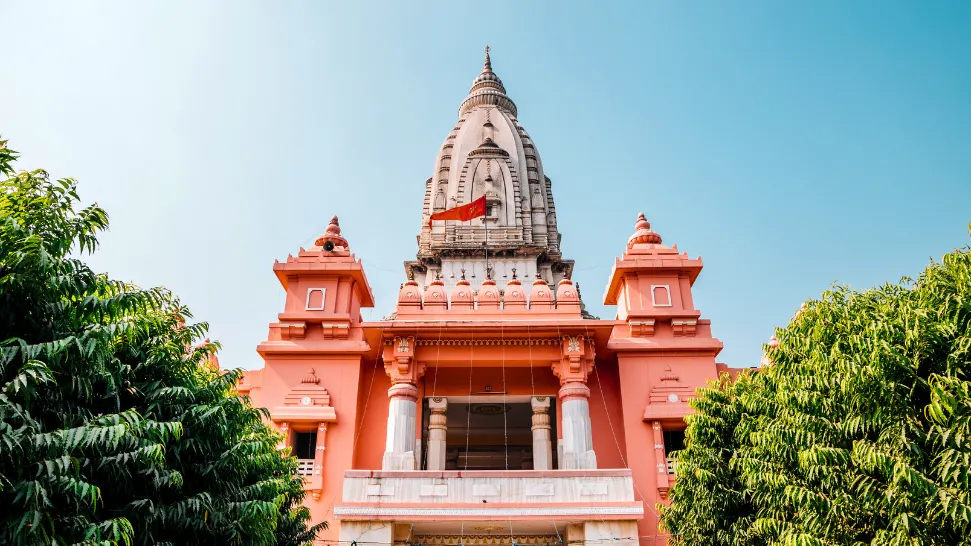
Standing within Banaras Hindu University, the New Vishwanath Temple is considerably different from Varanasi’s older, densely packed shrines. Built largely from white marble, it houses a tall Shiva temple along with shrines dedicated to other deities. Its spacious campus setting makes it a calmer place to experience the city’s religious architecture.
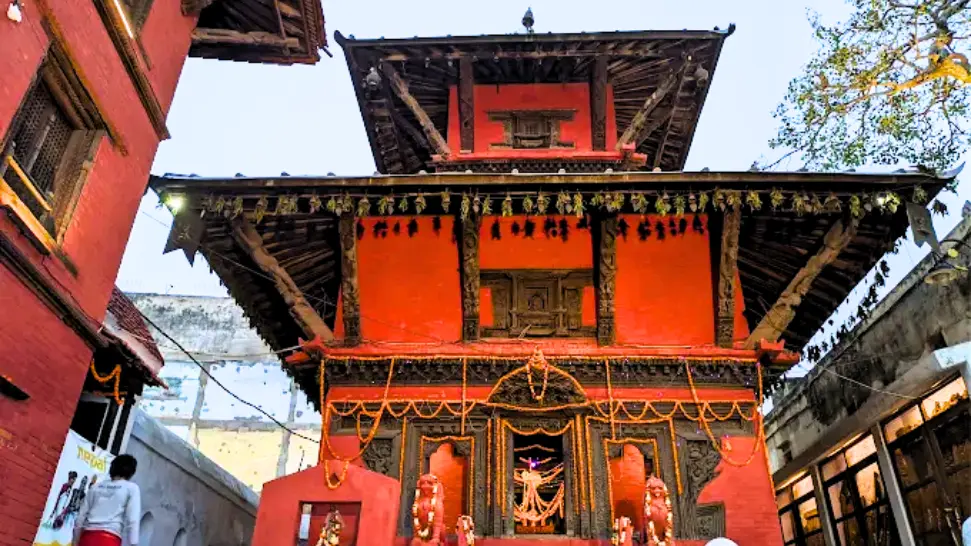
Located near Lalita Ghat, the Nepali Temple stands out for its Nepalese-inspired design. Built using wood, stone and terracotta, it features detailed carvings and a distinctive pagoda-style structure. The temple is dedicated to Lord Shiva and is popularly called “Little Khajuraho” because of its sculptural details.
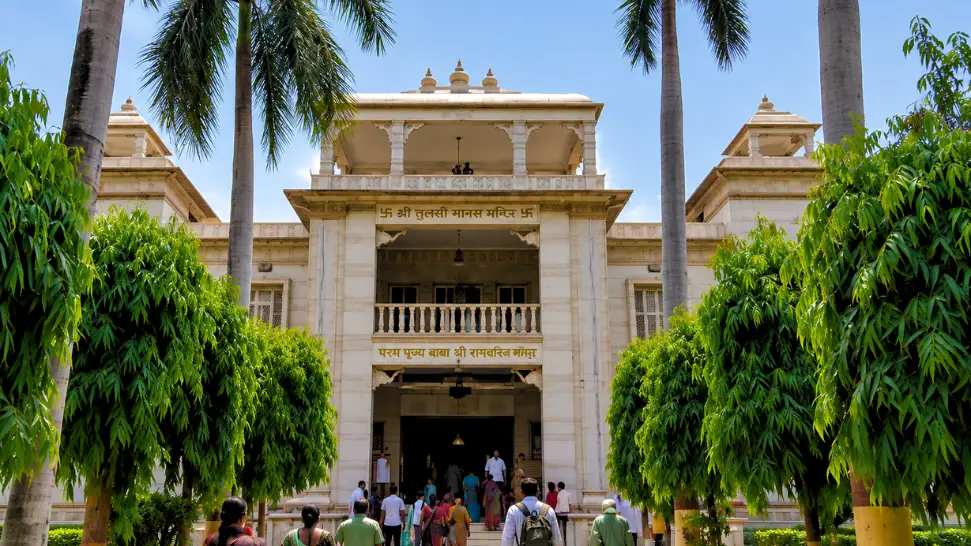
Tulsi Manas Temple is closely associated with Tulsidas and his literary legacy. Built in the 20th century, the white-marble temple contains verses from the Ramcharitmanas displayed across its walls. Its peaceful surroundings and connection with one of North India’s most influential devotional works make it an important cultural stop.
Varanasi’s story extends far beyond its temples and ghats. Its palaces, museums, ancient observatories and historic neighbourhoods preserve traces of the rulers, artists, scholars and traditions that have shaped the city over centuries.

As one of the major attractions in Varanasi, the Ramnagar fort lies across the Tulsi Ghat. Maharaja Balwant Singh builds this 18th-century red sandstone fort in Mughal style. As one of the nearby places to visit from Varanasi, it can be accessed by a 30-minute boat ride. Once you reach this fort, pay homage to the great saint Ved Vyasa in the inhouse temple and learn the legends surrounding it. Apart from this, a Bajrangbali temple and a museum inside the fort showcasing artefacts belonging to the royal families.
It is one of the ideal places to visit in December in India as the month-long Ram-Leela festival is held here. Be sure to enjoy the beautiful enactment of the Ramayana epic and collect souvenirs if you are in these parts during the winter.
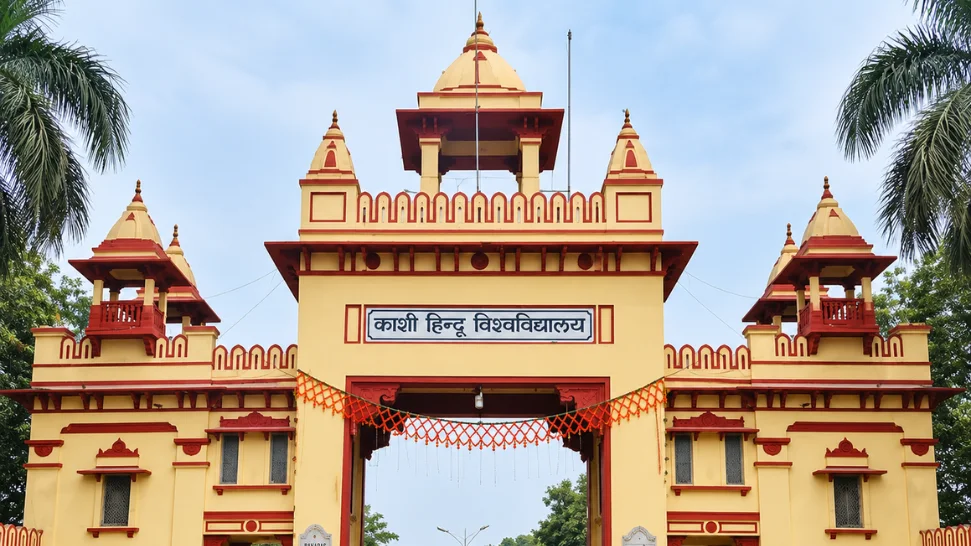
Although not one of the most obvious places to see in Varanasi, this university is situated across a 5.3 square kilometre campus donated by the Kashi Naresh Prabhu Narayan Singh. It is one of the biggest residential institutions in the world, and it houses more than 30,000 students. Indo-Gothic architecture starkly contrasts the Mughal architecture, making it one of the most unique Varanasi places.
This university was jointly established by Madan Mohan Malaviya, Annie Besant, and Maharaja Rameshwar Singh and attracted researchers and scholars from all over the globe in the modern day. If you have explored all the other tourist attractions in Varanasi, you can detour down the University.

Initially, this one of the top Varanasi places to go was established in the year 1920 at Godaulia as Bharat Kala Parishad; this Museum came to be known as Bharat Kala Bhavan when it was shifted to Kashi Nagari Pracharini Sabha in 1929. In 1962, it was inaugurated by Jawaharlal Nehru as it became a part of the Banaras Hindu University.
As one of the eminent historical places in India, this art and archaeological Museum houses more than 1 lakh objects. From pottery to coins to archival documents, it exhibits many articles that can be witnessed once you explore such places to visit in Varanasi.
Observe some of the rare collections in this museum from the Gupta period or from Akbar's reign to quench your thirst for knowledge. Although this place can be explored at any time of the year, it is one of the best places to visit in November in India, as many temporary exhibitions are held in winter.
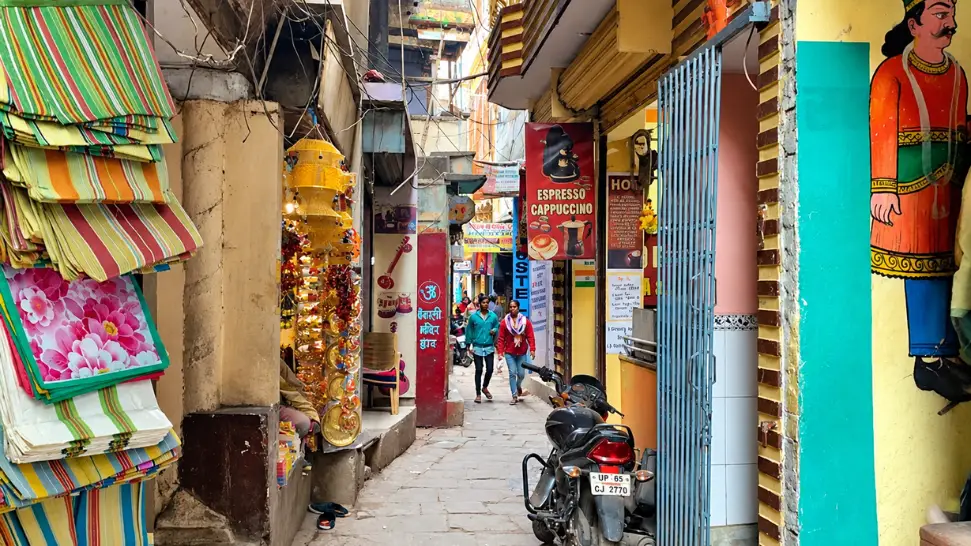
The lanes around Vishwanath Gali reveal Varanasi at street level, far beyond its major monuments. Bengali Tola, Kachauri Gali and Chitraghanta Gali lead through a maze of shrines, homes, shops and food stalls. Walking here offers glimpses of traditional Banarasi life, from silk textiles and local snacks to daily temple rituals.
The Buddhist Circuit around Varanasi connects Sarnath with other important sites linked to Buddha’s life and teachings. For travellers, it offers a quieter route through ancient stupas, monasteries, archaeological remains and major Buddhist pilgrimage centres.

Near the confluence of the Ganges and the Varuna rivers lies a top place of interest in Varanasi called Sarnath. This is where Gautam Buddha first taught about his Dhamma and the place of inception of the Buddhist Sangha through the enlightenment of Kondanna. Devotees and philosophers flock around these parts to explore some of the most important places to see in Varanasi, including the Dhamek Stupa Sarnath Museum.
The Dhamek Stupa marks the site where Buddha is believed to have delivered his first sermon. The nearby Sarnath Museum preserves important Buddhist sculptures, including the iconic Lion Capital of Ashoka, making both sites key highlights of Sarnath. To soak in the essence of Buddhism, Sarnath is one of the best places to visit in India in January, as the temperature is cooler and there is plenty of moderate sunlight.
Varanasi is best experienced beyond its temples and monuments. A sunrise on the Ganga, a dawn gathering at Assi Ghat, local street food and traditional shopping each reveal a different side of the city.
The ideal time to visit Varanasi depends on how you want to explore the city. Here is a comprehensive list of what you can expect:
Varanasi is one of the ideal places to visit In March In India, as the weather remains moderate during spring. The temperature ranges from 25 to 33 degrees centigrade, making it perfect for outdoor activities and sightseeing. This is the ideal time to attend the divine Ganga Aarti moored in the boats around the various sacred ghats of Varanasi. However, hotel stays may be costly because this is the peak tourist season.
Varanasi experiences moderate seasons around April to June as the temperature ranges from 24° centigrade to 37° centigrade. The skies are cloudy and overcast, and the air is moisture-laden with high humidity. Varanasi can be included in the list of places to visit in India Before You Turn 30 during summer as the stays are budget-friendly, but you can expect overcrowded sightseeing places.
July to September is off-season in these parts as this is the hottest time of the year, characterised by heavy rainfall. Boating facilities are unavailable as the rivers are filled to the brim. However, as the lush greenery springs back to life during the rainy season, this can be the ideal time to explore the various gardens around Varanasi. You can expect less crowded sightseeing places and budget-friendly stays during the monsoons.
Undoubtedly, Varanasi is one of the Best Places To Visit In Winter In India due to its pleasant climate, which ranges from 5° to 16° centigrade. This season sees an influx of foreign and domestic tourists due to the various festivals held here. From Deepavali to Kartik Purnima, the ghats echo with the cacophony of loudspeakers and colourful lights, adding to the charm of the city of lights.
The Ganges gets wrapped up in a moderate to dense fog, especially during the morning, which is a sight to behold. This is one of the ideal places to celebrate New Year in India, where you can indulge in seasonal delicacies like Malaiyyo and take a memorable boat ride while marvelling at the migratory Siberian birds.
|
Month |
Temp (Max/Min) |
Weather Opinion |
|
Jan |
23°/9°C |
Cool and dry |
|
Feb |
27°/12°C |
Pleasant and mild |
|
Mar |
33°/16°C |
Warm and comfortable |
|
Apr |
39°/22°C |
Hot and mostly dry |
|
May |
40°/26°C |
Very hot |
|
Jun |
39°/27°C |
Hot and humid |
|
Jul |
34°/26°C |
Rainy and humid |
|
Aug |
33°/26°C |
Wet and humid |
|
Sep |
33°/25°C |
Warm with frequent rain |
|
Oct |
33°/21°C |
Warm and gradually drier |
|
Nov |
30°/15°C |
Pleasant and dry |
|
Dec |
25°/10°C |
Cool and comfortable |
Three days are enough to cover Varanasi’s major temples, historic lanes, riverfront experiences and Buddhist heritage without making the schedule too rushed. This itinerary groups nearby attractions together, leaving enough time to experience the city at a comfortable pace.
Visit Kashi Vishwanath Temple and nearby shrines, then explore Vishwanath Gali, Bengali Tola and Kachauri Gali. Take time to sample local food and browse traditional shops.
Start with a sunrise boat ride on the Ganga and explore notable ghats such as Kedar, Scindia and Man Mandir. Return to Dashashwamedh Ghat in the evening for the Ganga Aarti.
Spend the day in Sarnath, visiting Dhamek Stupa, the archaeological ruins, Sarnath Museum and nearby Buddhist monasteries before returning to Varanasi.
The city of Varanasi is well connected by air, rail or road. To explore all the places to visit in Varanasi, you have to get down at either of the two major railway junctions, the Mughal Sarai junction or the Varanasi junction. Let us provide you with a comprehensive overview:
Varanasi is served by Lal Bahadur Shastri International Airport (VNS) at Babatpur, around 26 km northwest of the city. The airport handles both domestic and international flights. From the airport, travellers can reach central Varanasi by taxi, app-based cab or other local transport.
A couple of major railway stations in Varanasi are where almost all trains destined for Northern India pass through. The Mughal Sarai junction is located 18 km from the main city and is connected to all the major cities in India. Once you reach any of these railway stations, you can hail a cab or board a bus to reach the various places to visit in Varanasi.
The roadways are well maintained and convenient, which lead to Varanasi. One of the most thrilling journeys you can experience is travelling on a bus. Most travellers usually club 2 or 3 nearby cities and travel through the motorable road while travelling to Uttar Pradesh. Numerous state or private bus services, including some comfortable air-conditioned Volvo buses, ply frequently from Lucknow to Varanasi. You can avail of those as they drive through NH2 and NH28, providing a unique opportunity to travel through beautiful forests.
|
Route Name |
Distance |
Time |
|
Delhi to Varanasi |
817 km |
11 hours 50 mins |
|
Hyderabad to Varanasi |
1,230 km |
22 hours 45 mins |
|
Mumbai to Varanasi |
1,678 km |
1 day 2 hours |
|
Kolkata to Varanasi |
683 km |
11 hours 59 mins |
|
Bangalore to Varanasi |
1,819 km |
1 day 6 hours |
|
Chennai to Varanasi |
1,855 km |
1 day 8 hours |
|
Agra to Varanasi |
607 km |
9 hours 13 mins |
|
Jaipur to Varanasi |
839 km |
13 hours 7 mins |
|
Pune to Varanasi |
1,450 km |
1 day 3 hours |
|
Ahmedabad to Varanasi |
1,409 km |
21 hours 5 mins |
|
Chandigarh to Varanasi |
1,045 km |
15 hours 9 mins |
|
Jodhpur to Varanasi |
1,174 km |
18 hours 23 mins |
|
Manali to Varanasi |
1,337 km |
22 hours 15 mins |
|
Shimla to Varanasi |
1,144 km |
18 hours 12 mins |
|
Gurgaon to Varanasi |
821 km |
11 hours 53 mins |
|
Udaipur to Varanasi |
1,151 km |
16 hours 52 mins |
|
Jaisalmer to Varanasi |
1,395 km |
22 hours 7 mins |
|
Amritsar to Varanasi |
1,249 km |
18 hours 10 mins |
|
Goa to Varanasi |
1,846 km |
1 day, 10 hours |
|
Ernakulam to Varanasi |
2,358 km |
1 day 15 hours |
A journey down the city of culture must not only be reserved for older people going on a pilgrimage. As it has a lot of knowledge and experience to impart, people of any age group can embark on a journey to Varanasi.
If you plan to take a trip to these parts on your next vacation, choose among the best tour packages in India.
At Trip Planners India, we offer a wide range of customisable Varanasi tour packages to suit every kind of traveller looking to reach these parts from anywhere in the country. Enjoy unbeatable deals and discounts, the convenience of online booking, and instant confirmations.
As the best trip planners in India, we ensure that all the essential Varanasi attractions are included in your itinerary. Alternatively, you can pick from a wide range of additional sightseeing places or activities around the city to customise your package even further.
Intrigued to take a trip down the old lanes of Varanasi? Contact our 24/7 customer support today and partner with us, allowing us to make your holiday memorable.


 Ravi Saini
As a travel agent, I absolutely love the uttarakhand leads from Trip Planners India! The quality is exceptional and the conversion rate is over 85%. Highly recommend for anyone seeking top-quality travel leads!
 Praveen Kumar
Good experience with this company. I have used multiple channel leads and purchased queries from there. But it was only waste of money and time no conversion was there but once i started taking query from this trip planner website result is very positive and in 50 queries only i have matured many queries so i will recommend this company to purchase queries and taking tours also from this channel.
 Rahul Kashyap
I use around 2 month leads are very genuine and love with work with the trip planner
Thanks
From HIMROAD TOUR AND TRAVEL SHIMLA
 Olivia Lee
Amazing experience with trip planners india the process was smooth, and i received multiple great travel options within a short time. The agents were professional, responsive, and helped customize ny trip perfectly according to my needs. Highly recommended for anyon planning a hassle-free vacation.